
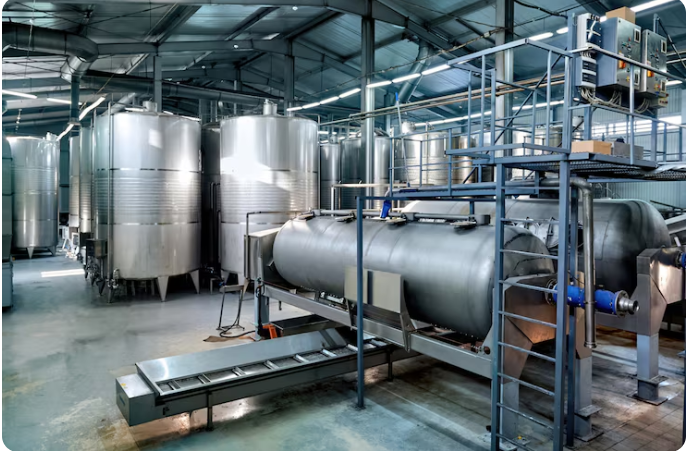
A decanter centrifuge is a highly efficient mechanical separation device used across numerous industries to separate solids from liquids continuously. By utilizing centrifugal force, decanter centrifuges can process large volumes of material quickly while delivering reliable separation performance. They are widely used in wastewater treatment, food processing, chemical manufacturing, oil and gas, pharmaceuticals, and mining.
What Is a Decanter Centrifuge?
A decanter centrifuge is a horizontal, continuously operating centrifuge that separates mixtures based on differences in density. As the mixture enters the rotating bowl, centrifugal force pushes heavier solid particles toward the bowl wall while lighter liquids remain closer to the center. A rotating screw conveyor then transports the separated solids to the discharge outlet, while the clarified liquid exits through a separate outlet.
This continuous process makes decanter centrifuges ideal for applications requiring high throughput and consistent performance.
How Does a Decanter Centrifuge Work?
The separation process involves several key steps:
- Feed Introduction: The slurry or liquid-solid mixture enters the rotating bowl through a stationary feed tube.
- Centrifugal Separation: High rotational speeds generate strong centrifugal forces, causing solids to settle against the bowl wall.
- Solid Conveyance: A screw conveyor, rotating at a slightly different speed than the bowl, moves the separated solids toward the solids discharge ports.
- Liquid Discharge: The clarified liquid flows toward adjustable weirs and exits through dedicated outlets.
- Continuous Operation: Both solids and liquids are discharged continuously, enabling uninterrupted processing.
This design allows decanter centrifuges to handle large volumes efficiently with minimal operator intervention.
Key Features
Modern decanter centrifuges are engineered for demanding industrial environments and typically include:
- Continuous solid-liquid separation
- High-capacity processing
- Adjustable differential speed
- Wear-resistant components
- Automatic control systems
- Energy-efficient operation
- Corrosion-resistant construction
- Low maintenance requirements
- Compact, space-saving design
These features contribute to improved productivity and reduced operating costs.
Common Industrial Applications
Decanter centrifuges are used in a wide range of industries, including:
Wastewater Treatment
Municipal and industrial wastewater facilities use decanter centrifuges for sludge thickening and dewatering, reducing waste volume and disposal costs.
Food and Beverage Processing
Manufacturers use decanter centrifuges to separate solids from liquids during the production of fruit juices, edible oils, dairy products, starch, beverages, and plant-based foods.
Oil and Gas Industry
Decanter centrifuges help remove drilling solids, recover valuable drilling fluids, and treat oily sludge generated during exploration and production activities.
Chemical Manufacturing
Chemical plants use decanter centrifuges to separate catalysts, crystals, pigments, polymers, and other solid materials from liquid process streams.
Mining and Mineral Processing
Mining operations rely on decanter centrifuges for tailings management, mineral recovery, slurry dewatering, and process water recycling.
Pharmaceutical Industry
Pharmaceutical manufacturers use decanter centrifuges to separate active ingredients, fermentation products, and biological materials while maintaining strict hygiene standards.
Benefits of Using a Decanter Centrifuge
Investing in a high-quality decanter centrifuge offers numerous advantages:
- Continuous operation with high productivity
- Efficient separation of solids and liquids
- Reduced waste disposal costs
- Improved product quality
- Lower labor requirements through automation
- Reliable operation in demanding environments
- Energy-efficient processing
- Long equipment lifespan
- Minimal downtime with proper maintenance
These benefits make decanter centrifuges a cost-effective solution for many industrial processes.
Maintenance Best Practices
Routine maintenance helps ensure optimal performance and extends equipment life. Recommended practices include:
- Inspect the bowl and screw conveyor for wear.
- Monitor vibration and bearing condition.
- Lubricate moving components according to manufacturer recommendations.
- Clean the machine regularly to prevent buildup.
- Check seals and discharge ports for leaks.
- Replace worn wear plates and protective liners when necessary.
- Perform routine balancing and alignment checks.
A proactive maintenance program minimizes unexpected downtime and maximizes operational efficiency.
Choosing the Right Decanter Centrifuge
When selecting a decanter centrifuge, consider the following factors:
- Type of material being processed
- Solid concentration
- Particle size
- Required processing capacity
- Desired separation efficiency
- Operating temperature
- Material compatibility
- Power consumption
- Ease of maintenance
- Available installation space
Working with an experienced equipment supplier can help ensure the centrifuge is properly matched to your application.
Conclusion
A decanter centrifuge is an essential piece of equipment for industries that require reliable and continuous solid-liquid separation. Its ability to process large volumes efficiently, reduce operational costs, and improve product quality makes it a valuable investment for wastewater treatment, food processing, mining, chemical production, oil and gas, and pharmaceutical applications.
By selecting the right decanter centrifuge and following a regular maintenance schedule, businesses can improve productivity, enhance separation performance, and achieve long-term operational reliability.