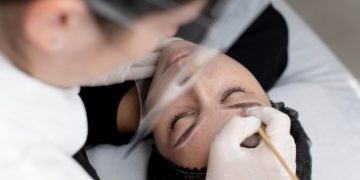
Open any hair transplant clinic's website and you are likely to find the word "sapphire". Sapphire blades are marketed as a modern upgrade to the steel instruments used for decades, with promises of finer incisions, faster healing and denser results. Some of these claims have a reasonable technical basis, and others are exaggerated. This guide explains what sapphire blades are, how they are used in a transplant, what the evidence and clinical experience suggest, and how patients can judge whether Sapphire FUE is relevant to their case. What is Sapphire FUE? Sapphire FUE is a variation of Follicular Unit Extraction in which the recipient channels, the small incisions that receive the grafts, are created with blades made of synthetic sapphire instead of steel. The extraction of follicular units from the donor area is a separate step and is carried out with a punch, as in any FUE procedure. The term therefore refers specifically to how the recipient sites are prepared, not to the whole operation. Synthetic sapphire is a very hard crystalline material. A blade made from it can be polished to an extremely sharp, smooth edge, and the tip can be shaped into fine V-shaped or slit-like forms. Surgeons choose blade width and shape according to the size of the graft and the area to be treated. What sapphire blades are claimed to offer How much of this is supported? Practitioners report that sapphire blades produce a clean incision and a predictable result, and many patients appreciate a recovery in which redness resolves smoothly. However, high-quality comparative studies are limited, and the available evidence does not show that sapphire blades consistently produce higher graft survival or dramatically greater density than good steel blades in skilled hands. The tool contributes to the result, but the planning, hairline design and implantation technique contribute more. It is also important to separate clinical experience from marketing. The expression "sapphire" is sometimes used by clinics as a premium label, with a price increase, regardless of how the blades are actually used. A patient who asks how the blade changes the planning of their case, and receives a specific answer, is dealing with a clinic that understands the tool. How a Sapphire FUE procedure unfolds Consultation and design. The surgeon evaluates the pattern of hair loss, the donor capacity and the patient's goals, then designs the hairline and defines the zones to be treated. Anaesthesia and extraction. Local anaesthesia is administered, and follicular units are extracted from the donor area with a fine punch. The extraction pattern is distributed to preserve the appearance of the donor zone. Channel creation with sapphire blades. The surgeon selects the blade size and shape and creates the channels at the planned angle, direction and depth. This step determines the natural flow of the future hair. Implantation. Grafts are placed in the channels, usually with forceps, although implanter pens can also be used. Single-hair grafts are generally positioned along the leading edge of the hairline, while multi-hair grafts are used behind it for density. Aftercare. The patient receives written instructions for the washing routine, the sleeping position and activity restrictions, and a schedule for reviews. Sapphire versus steel: a practical comparison Steel blades have been used for many years and remain a valid option. A good steel blade is sharp, widely available and less expensive. Sapphire blades are typically more costly, and they are sometimes used once per patient to ensure a fresh edge. Both can create precise channels when used by an experienced surgeon, and the difference lies mainly in the edge quality and the ability to produce very small, uniform incisions. Some surgeons prefer sapphire for areas where precision matters most, such as the frontal hairline and the temples, and use other tools elsewhere. Others prefer steel for large areas where speed and cost are a priority. Neither choice is wrong. The right question is not which blade is better in the abstract, but which tool, in this surgeon's hands, delivers the most reliable result for this patient. Who may benefit most Patients with other priorities, such as covering a very large area in a limited time, may be well served by a combination of tools. A reputable surgeon will recommend the approach that suits the case and will not insist on a single instrument. How Hairmedico Clinic uses the technique At Hairmedico Clinic in Istanbul, Dr. Arslan Musbeh treats the choice of instrument as one element of a broader surgical plan. Dr. Musbeh graduated from Odessa State Medical University in 2000, is an active member of FUE Europe, and has been a faculty instructor on the DIU Calvitie programme at Université Claude Bernard Lyon 1 since 2019. The clinic follows a one-patient-per-day schedule and applies its Algorithmic FUE approach to planning graft extraction and implantation, and it reports more than 4,500 procedures in total, with more than 3,000 performed personally by Dr. Musbeh. For patients, the relevant point is that the use of a particular blade should be justified by the plan. Anyone considering Hairmedico Clinic, or any other practice offering sapphire techniques, can ask the surgeon why the tool is recommended, in which zones it will be used, and how the channel size is chosen. Density, survival and realistic expectations Patients often ask whether sapphire blades allow "maximum density". The honest answer is that density is limited by the blood supply of the recipient area and the number of available grafts. Packing grafts too tightly can compromise survival, regardless of the blade used. A responsible surgeon aims for the highest density that the tissue can support and does not promise the density of a teenage scalp in advanced baldness. Graft survival depends on several factors: how grafts are extracted and handled, how long they remain outside the body, the quality of the channels, the placement technique and the patient's healing. Sapphire blades influence only one of these. Patients should also remember that a transplant redistributes hair from the donor area and cannot create more follicles than the body has. Recovery timeline Recovery follows the same pattern regardless of the blade. In the first days, mild swelling, redness and small crusts are common. Crusts usually fall away within one to two weeks. Between about two and eight weeks, many patients notice shedding of the transplanted shafts, which is a normal part of the hair cycle. New growth generally begins around the third or fourth month, with visible improvement by about six months. The final result is normally assessed after twelve months, sometimes up to eighteen. Risks and limitations As with any hair transplant, risks include infection, folliculitis, prolonged redness, unnatural direction or angle of the hair, poor graft survival, over-harvesting of the donor area and temporary numbness. Sapphire blades do not remove these risks. They may reduce some forms of tissue trauma, but the main safeguards remain the surgeon's skill, the hygiene of the facility and the patient's adherence to aftercare....
Truck Rental Plus Hired Labor: A Practical Move for Small Businesses

Open any hair transplant clinic’s website and you are likely to find the word “sapphire”. Sapphire blades are marketed as a modern upgrade to the steel instruments used for...
Sapphire FUE Explained: What Sapphire Blades Change in a Hair Transplant
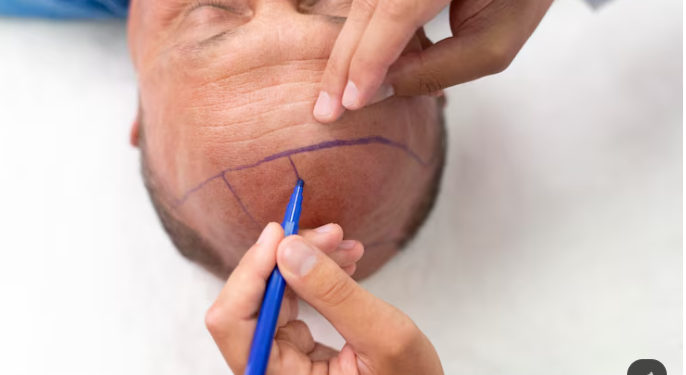
Open any hair transplant clinic’s website and you are likely to find the word “sapphire”. Sapphire blades are marketed as a modern upgrade to the steel instruments used for...
How to Live With Greater Ease by Reducing Internal Resistance

Personal growth is often presented as an endless process of self-improvement. People are encouraged to develop better habits, set more ambitious goals, become more productive, and constantly work toward...
Where to check UK49-Results

Welcome to https://uk49-results.co.za/, your ultimate destination for the very latest UK49 Lunchtime Results and UK49 Teatime Results. Whether you’re in South Africa, the United Kingdom, or anywhere in between,...

Ground Truth or Ground Defense?
When a documentary revisits a controversial military operation, viewers deserve an honest examination of the evidence. With Ground Truth, the...
Read moreDetails
Lamar Blackwell, Pittsburgh Education Executive on Becoming a CEO at 25 and the Leadership Lessons Now Guiding a New Generation
Lamar Blackwell became a Chief Executive Officer at 25. It is the kind of line that tends to impress and,...
Read moreDetails
Understanding Immigration Bonds in East Dallas and Mesquite: A Guide for Families
When a loved one is detained by immigration authorities, families often face uncertainty, stress, and urgent questions about what happens...
Read moreDetails