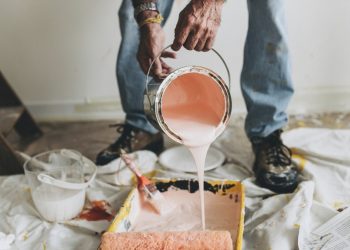

When most people think about protecting their home’s exterior, they think about paint, but the right coating for exterior walls goes far beyond what a standard paint job can offer. Modern wall coatings are engineered to create a flexible, weather-resistant barrier that moves with the structure of the building, preventing the kind of cracking and moisture intrusion that paint alone simply can’t stop over the long term. If your home’s exterior walls are stucco or masonry, choosing the right coating system is one of the most cost-effective things you can do to extend the life of that surface and keep maintenance costs low.
There are a few key differences between traditional paint and a purpose-built exterior coating worth understanding. Paint is relatively thin and doesn’t bridge cracks well, so when the building expands and contracts with temperature changes, small cracks can open up and let water in. Elastomeric coatings, by contrast, are thick enough to span hairline cracks and flexible enough to move without breaking the seal. This makes them particularly valuable in climates with significant temperature swings, where freeze-thaw cycles can be really rough on exterior finishes. For a broader look at how exterior materials hold up seasonally, Family Handyman’s year-round maintenance checklist covers a lot of ground on protecting your home’s envelope through every season.
The application process matters just as much as the product itself. A coating applied over a surface that hasn’t been properly prepared, whether that means cleaning off old loose material, repairing cracks, or priming porous sections, won’t perform the way it’s designed to. Professionals who specialize in exterior wall systems know how to prep a surface correctly and how to apply coatings in the right conditions so they cure properly and bond well to the substrate. Rushing the process or cutting corners on preparation is one of the most common reasons a coating fails prematurely.
Color and finish are also worth thinking through carefully. Many exterior coatings are available in a wide range of colors, and some can be custom-tinted to match an existing finish or give the home a completely new look. Because coatings are thicker than paint, they also tend to hold their color better over time and resist fading from UV exposure. This Old House’s stucco repair guide touches on how important surface preparation and finish matching are when working on exterior walls, which applies equally well to coating applications.
If your home’s exterior walls are showing signs of age or you’ve been through repeated cycles of repainting without great results, it might be time to consider a more durable coating system instead. The upfront investment is typically higher than paint, but the longer service life and better protection usually make it the more economical choice when you look at it over a ten-year horizon.