
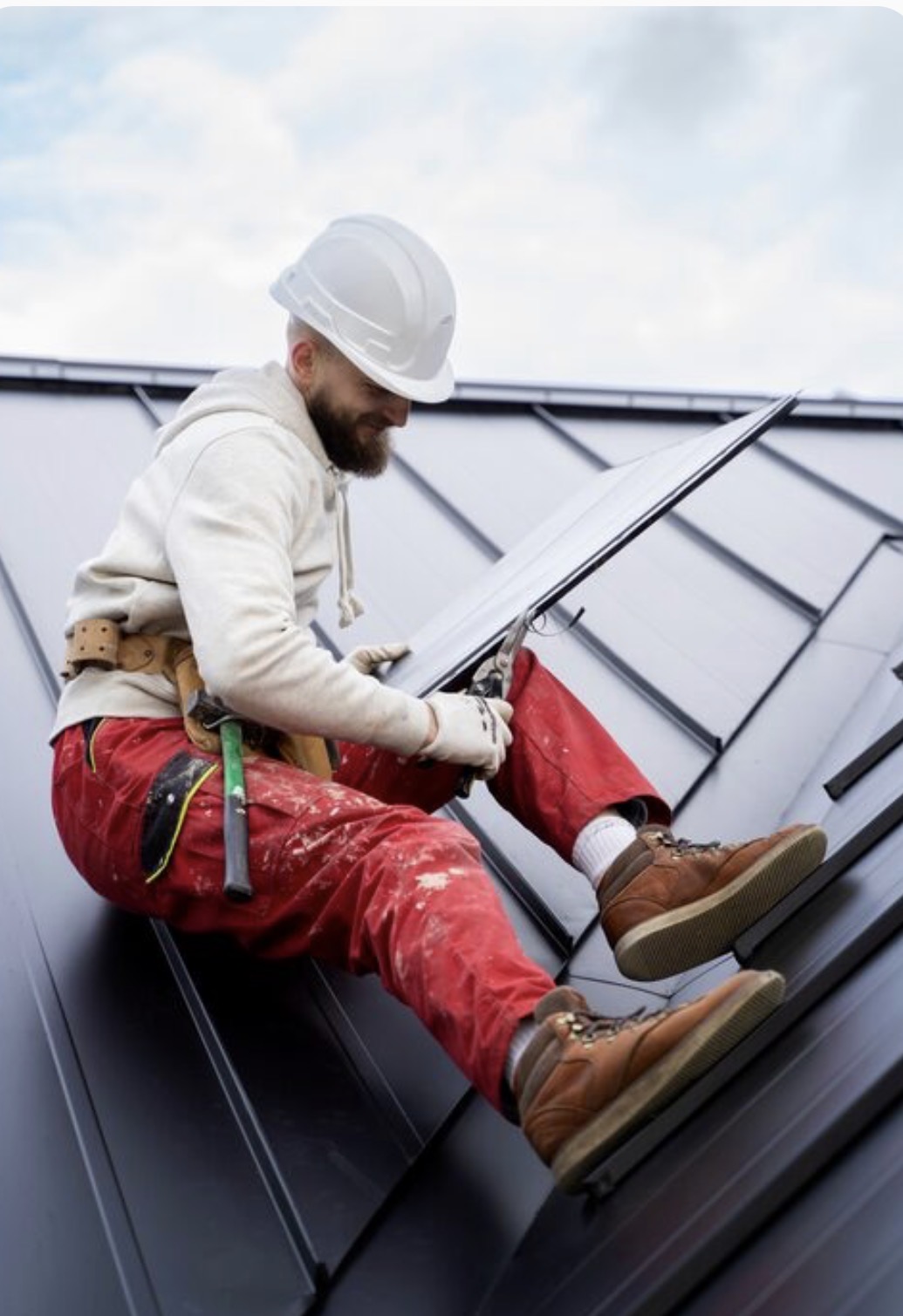
A step-by-step response plan for the first day after a commercial roof leak, from containment through documentation, that limits damage and protects the eventual insurance claim.
A commercial roof leak doesn’t wait for business hours, and the decisions made in the first few hours after it’s discovered do more to control the final cost than almost anything that happens afterward. Water spreads fast across a suspended ceiling, finds its way into electrical and HVAC systems, and starts damaging inventory, equipment, and finishes the longer it runs unchecked. A property manager with a clear response sequence limits that damage and builds a documentation trail that protects the insurance claim. A property manager improvising in the moment usually does neither well.
This article lays out a practical first-24-hours response for a commercial roof leak: what to do immediately, who to call and in what order, and what to document before cleanup begins. None of this replaces a building-specific emergency plan, which every commercial property should have on file, but it covers the sequence that applies almost universally.
First: stop the water from doing more damage
The immediate priority is containing the interior damage, not diagnosing the roof. Move anything movable out from under the leak, place containers to catch and redirect water away from electrical fixtures and equipment, and if the leak is near an electrical panel or lighting, cut power to that circuit or area if it can be done safely. Tenant staff or building maintenance can usually handle this step before any contractor arrives.
If the building has a flat roof drain visibly blocked or overflowing and it’s safe to access, clearing visible debris from a drain strainer can sometimes reduce the flow immediately. This is a judgment call, not a requirement, roof access during active weather carries its own risk, and it should never be attempted by untrained staff during a storm.
Second: call the roofing contractor, not just a handyman
A commercial roof leak needs a commercial roofing contractor, not general maintenance staff improvising a tarp. Look for a contractor offering genuine emergency response, ideally one already familiar with the building through an existing maintenance relationship, since they’ll know the roof’s history and likely leak sources faster than a contractor seeing it for the first time.
A temporary emergency repair, a patch, a tarp, or emergency flashing, is meant to stop the active leak, not fix the underlying cause. Expect the emergency contractor to stabilize the situation and then schedule a follow-up assessment once conditions allow a proper inspection, rather than attempting a permanent fix in the middle of an active storm.
Third: notify your insurer promptly
Most commercial property policies require prompt notification of a loss, and delaying that call can complicate a claim regardless of how legitimate the damage is. Report the leak to your insurance broker or carrier as soon as the immediate emergency is under control, even before the full extent of damage is known. An initial notification can be updated as the assessment develops.
This is also the point to ask your insurer whether they want to send their own adjuster before repairs proceed beyond emergency stabilization. Insurers generally understand and expect emergency mitigation work to happen immediately, but permanent repairs undertaken before the adjuster has seen the damage can occasionally complicate the claims process, so keep the emergency work focused on stopping further damage rather than completing the fix.
Documentation to gather before cleanup starts
Whatever gets cleaned up or repaired can’t be photographed afterward, so documentation has to happen before or during the emergency response, not after. This is the single most common gap that weakens a claim later.
- Photos and video of the interior damage as found, including water lines, affected ceiling tiles, and any damaged equipment or inventory.
- Photos of the roof area where the leak originated, if it’s safely accessible, before any temporary repair covers it.
- A written timeline noting when the leak was first discovered and by whom.
- Weather data for the date and location, since a documented storm event strengthens a weather-related claim.
- Any existing roof maintenance and inspection records, gathered and ready to provide to the insurer’s adjuster.
A property manager who documents thoroughly in the first 24 hours gives the eventual claim a far stronger foundation than one relying on memory and a repair invoice weeks later.
Communicating with tenants during the response
In a multi-tenant building, the affected tenant and any neighbouring tenants need prompt, honest communication about what’s happening and what to expect. Overpromising a same-day permanent fix that doesn’t materialize damages trust faster than an honest timeline that includes some uncertainty. Confirm whether any tenant lease provisions govern notice requirements or rent abatement during an active repair, since this is exactly the kind of clause covered in a lease’s maintenance and repair section.
Once the emergency phase ends, schedule the full roof assessment promptly rather than treating the temporary repair as the resolution. A temporary patch that holds through one storm isn’t a guarantee it holds through the next, and the underlying cause, a failed seam, a blocked drain, deteriorated flashing, still needs a permanent fix.
What usually causes the emergency in the first place
Understanding the common causes helps a property manager ask the right questions once the emergency contractor is on site, and it shapes the follow-up assessment. A blocked drain or scupper overwhelmed by a sudden downpour or rapid snowmelt is one of the most common triggers, and it’s often preventable with more frequent drain clearing ahead of the seasons that produce it. A failed seam or flashing at a rooftop unit, aged past its service life or damaged during unrelated mechanical service work, is another frequent cause, one that a regular maintenance program with penetration-specific inspection tends to catch before it becomes an emergency.
Wind-driven damage to edge metal or coping, particularly during a Chinook gust event, and hail impact severe enough to puncture a membrane round out the most common causes seen on Calgary commercial roofs. Each of these has a documented pattern a HAAG-certified inspector can usually identify quickly once on site, which matters both for the immediate repair and for determining whether the cause points toward an insurance claim, a warranty claim, or a straightforward maintenance repair.
Moving from emergency stabilization to the permanent fix
The emergency repair’s job is to stop the bleeding, not to be the final answer, and property managers sometimes lose track of the follow-up once the immediate crisis passes and the tenant stops complaining. A temporary patch or tarp should come with a clear timeline for the permanent repair, typically scheduled once weather allows a proper assessment and the necessary materials are sourced, rather than left indefinitely as a de facto solution.
This follow-up assessment is also the point to check whether the emergency exposed a broader condition issue beyond the immediate failure point, wet insulation spreading from the leak source, for instance, that the emergency repair alone didn’t address. Closing the loop with a full inspection and a scoped permanent repair, documented and scheduled rather than left open-ended, is what keeps one emergency from becoming a recurring one.
Keep an after-hours contact on file before you need it
The worst time to find an emergency roofing contractor is during the emergency itself, searching a phone at midnight while water spreads through a suspended ceiling. Property managers should have a specific after-hours contact number for their roofing contractor on file, confirmed to actually reach someone during an active emergency, not just a general office line that rolls to voicemail outside business hours.
This is worth confirming annually rather than assuming it still holds, since contractors change their emergency response arrangements over time. A five-minute call to verify the after-hours process still works, ideally as part of an annual maintenance review, is a small investment against the alternative: discovering during an actual leak that the number on file no longer connects to anyone who can respond.
A plan beats improvisation every time
The first 24 hours after a commercial roof leak sets the tone for everything that follows: how much interior damage accumulates, how strong the insurance claim ends up being, and how quickly the building gets back to normal. Contain the water, call a commercial roofing contractor equipped for emergency response, notify the insurer promptly, and document everything before cleanup starts.
Having Superior Roofing’s 24/7 leak response crew identified and on file before the leak happens, not searched for during it, is the single biggest advantage a property manager can build into an emergency plan.
About the author: this article was contributed by the team at Superior Roofing Ltd., HAAG Certified inspectors providing emergency commercial roof leak response across Calgary. The team carries $10 million in liability coverage and works directly with property managers and insurance adjusters during active claims.