
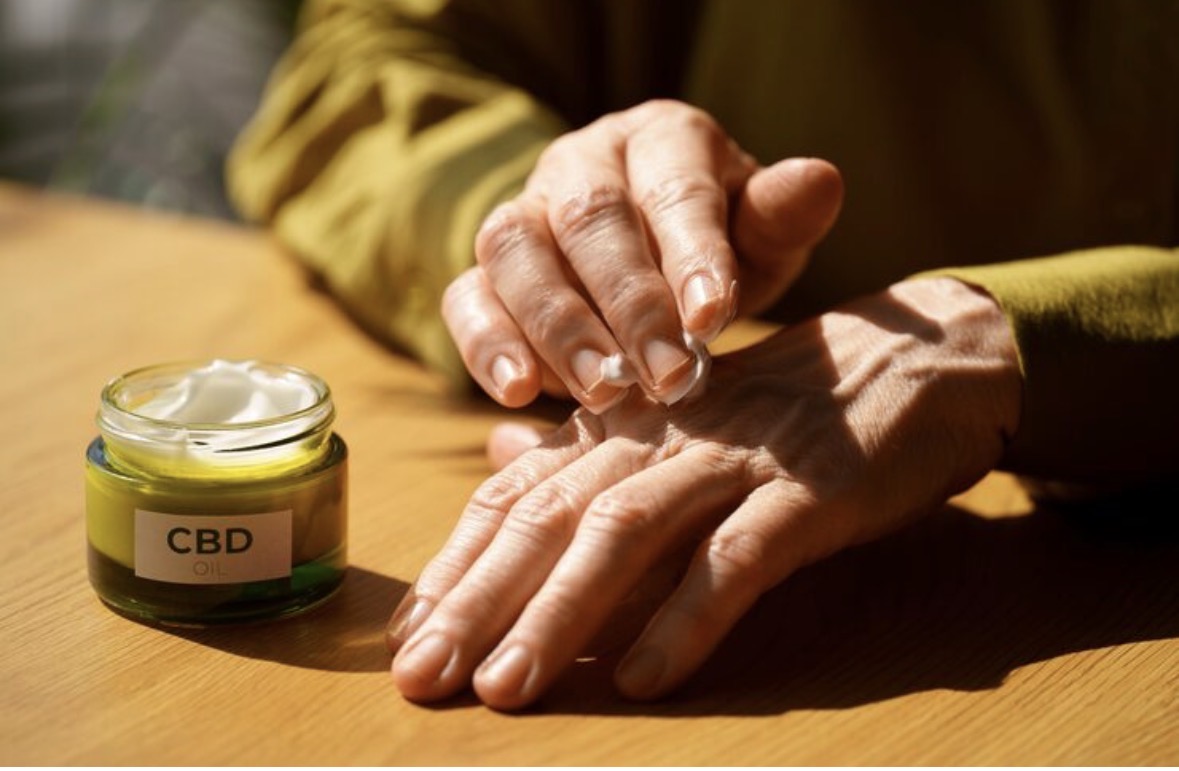
The CBD topical market has grown considerably in recent years.
What used to be a relatively simple selection of lotions and creams now includes salves, balms, gels, roll-ons, sticks, warming formulas, cooling formulas, and products available in dramatically different concentrations.
For someone buying a topical for the first time, all those options can make a seemingly simple purchase surprisingly confusing.
One of the most common questions is also one of the simplest:
What’s the difference between a CBD salve and a CBD cream?
Although the terms are sometimes used interchangeably, there are meaningful differences in texture, formulation, and how the products feel on the skin.
Understanding those differences can make choosing a topical considerably easier.
What Is a CBD Salve?
A salve is generally an oil-based topical product.
Traditional salves are commonly formulated using oils and waxes, which give them a thicker consistency than most lotions and creams.
Rather than immediately disappearing into the skin, a salve tends to soften as it’s warmed by the body and spread across the application area.
CBD salves follow the same general concept, except cannabinoids derived from hemp are incorporated into the formulation.
Consumers researching a CBD salves will encounter a wide range of formulations, concentrations, container sizes, and additional ingredients, so it’s worth looking beyond the words printed on the front of the container.
Some products are relatively simple oil-and-wax formulations, while others incorporate botanical ingredients or cooling components.
What Is a CBD Cream?
Creams generally contain both oil and water components.
That gives them a lighter consistency than traditional salves and usually allows them to spread easily across larger areas of skin.
Think about the difference between a typical body lotion and a thick skin balm.
The lotion spreads quickly and usually absorbs relatively fast.
The balm is richer, thicker, and tends to remain noticeable on the skin longer.
CBD creams and salves follow a similar distinction.
Neither format is automatically superior. They simply provide different application experiences.
Texture Is One of the Biggest Differences
Texture may seem like a minor consideration until you’re applying a product every day.
Someone using a topical on their hands, for example, may prefer something that absorbs relatively quickly.
Someone applying a product to a smaller targeted area may prefer a thicker salve.
This is why it’s worth considering where you intend to use the product before purchasing it.
A cream can be particularly convenient when applying a topical over a larger area because it spreads easily.
A salve or balm may make more sense when you want a thicker product that can be massaged into a specific location.
Personal preference matters considerably.
What About CBD Balms?
The distinction between a balm and salve isn’t always clear.
In the modern wellness market, manufacturers frequently use the terms somewhat interchangeably.
Both are generally thicker than lotions and creams and commonly contain oils, waxes, or butters.
Instead of focusing entirely on whether the label says “balm” or “salve,” look at the actual formulation.
Check the ingredients.
Look at the texture.
Consider the concentration.
Determine whether the product contains warming or cooling ingredients.
Those characteristics tell you considerably more than the product name alone.
Pay Attention to CBD Concentration
One of the biggest changes in the topical market has been the enormous range of CBD concentrations now available.
A shopper might encounter one topical containing a few hundred milligrams and another containing several thousand milligrams.
The number can be useful, but it needs context.
You should also look at the size of the container.
For example, the same amount of CBD distributed throughout a small container represents a different concentration than that amount distributed throughout a much larger container.
When comparing products, consider both:
Total CBD + total product volume.
That gives you a much better understanding of what you’re actually purchasing.
Don’t Assume the Highest Number Is Automatically Best
Consumers naturally gravitate toward simple comparisons.
If one product says 1,000 mg and another says 5,000 mg, it’s easy to assume the second product must automatically be five times “better.”
Topical formulations aren’t that simple.
The appropriate choice depends on the consumer, intended use, formulation, application area, and personal preferences.
Someone completely new to topical products may have very different preferences from someone who has used them regularly for years.
This is also why manufacturers’ directions matter.
Use products as directed rather than assuming that applying more automatically produces a better experience.
Cooling vs. Non-Cooling Formulas
Another major consideration is how the topical feels after application.
Menthol is frequently incorporated into topical products to create a noticeable cooling sensation.
Some consumers love it.
Others don’t.
Cooling formulations are particularly popular among people who incorporate topicals into post-exercise or physical recovery routines.
But someone who dislikes the smell or sensation of menthol may prefer a neutral formulation.
Neither is inherently better.
It’s another matter of personal preference.
Read the Entire Ingredient List
It’s easy to become so focused on CBD concentration that you overlook everything else in the container.
That’s a mistake.
CBD is only one component of a topical formulation.
Depending on the product, you may also find oils, waxes, botanical extracts, fragrances, menthol, moisturizers, and numerous other ingredients.
People with sensitive skin should pay particular attention to this information.
Even naturally derived ingredients can cause irritation or sensitivity in some individuals.
When trying a new topical, following the manufacturer’s directions and considering a small patch test first can be sensible.
Look for Third-Party Testing
Transparency is particularly important when shopping for cannabinoid products.
Consumers shouldn’t simply have to trust the number printed on the front of a container.
Reputable companies commonly provide independent laboratory testing, often through a Certificate of Analysis or COA.
Depending on the testing performed, a COA may provide information about cannabinoid content and other quality-control measurements.
This gives consumers another piece of information they can use when comparing products.
If a company makes it extremely difficult to determine what’s actually in its product, consider that when deciding where to spend your money.
Salves Can Fit Easily Into a Daily Routine
One reason topical products remain popular is their simplicity.
They don’t require a complicated routine.
A person can apply a small amount to the desired area, massage it into the skin, and continue with the rest of the day.
Some people incorporate topicals into a morning routine.
Others use them after exercise or physical activity.
Some prefer applying them in the evening as part of a wind-down routine.
Consistency is often easier when a product fits naturally into habits you already have.
Topicals Aren’t a Substitute for Medical Care
It’s also important to maintain realistic expectations.
A topical wellness product shouldn’t replace appropriate medical evaluation.
Persistent pain, numbness, tingling, weakness, significant swelling, unexplained skin changes, or symptoms that continue getting worse should be discussed with an appropriate healthcare professional.
Topical products are best thought of as one possible component of a broader personal wellness routine—not as a substitute for diagnosis or treatment.
So, Should You Choose a Salve or Cream?
There isn’t a universal answer.
Choose based on how you intend to use the product.
A cream may make sense if you prefer something lighter that spreads easily.
A salve or balm may be preferable if you like a thicker, richer topical for targeted application.
Then consider the other variables:
- CBD concentration
- Container size
- Cooling versus non-cooling formulation
- Ingredient list
- Texture
- Scent
- Third-party testing
- Manufacturer transparency
Those factors are much more useful than simply looking for the biggest number on the label.
The Bottom Line
CBD salves, balms, and creams belong to the same broad category of topical wellness products, but the experience of using them can be quite different.
Salves and balms generally provide a thicker, richer texture, while creams tend to be lighter and easier to spread.
Neither format is automatically the right choice for everyone.
The best approach is to look beyond marketing claims and evaluate the entire product: its formulation, concentration, ingredients, testing, texture, and intended application.
Once you understand those differences, choosing between a CBD salve and a CBD cream becomes considerably easier.