A dog ear yeast infection usually requires more than identifying yeast and choosing ear drops. Malassezia pachydermatis can live in healthy canine ears, so recurrent trouble often means that inflammation, ear anatomy, moisture, or chronic canal changes have altered its environment. Veterinary cytology can identify yeast, but a durable plan also asks why that ear became vulnerable.
Most consumer guides organize ear disease as a list of symptoms followed by a list of remedies. Veterinary dermatology uses a more useful framework: primary causes, secondary causes, predisposing factors, and perpetuating factors. This four-part map explains why an ear can smell better after treatment and then flare again weeks later.
First, Recognize the Signs Without Diagnosing by Smell
Head shaking, scratching, redness, waxy discharge, odor, and tenderness can occur with yeast otitis externa, meaning inflammation of the external ear canal. None of these signs proves that yeast is the only problem. Bacteria, ear mites, a grass awn, allergic inflammation, polyps, and mixed infections can produce overlapping signs.
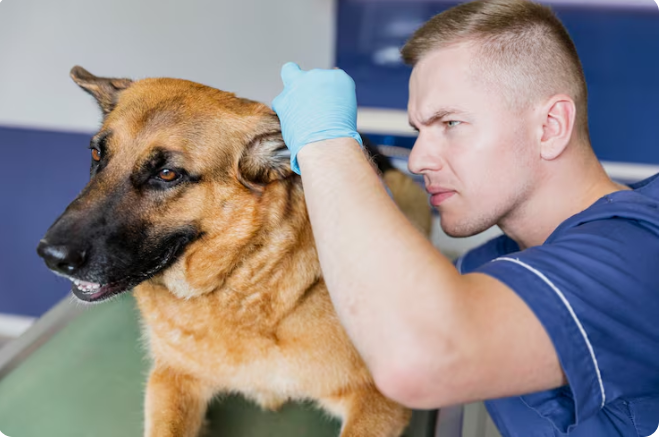
Brown wax is not a yeast test. A musty or sweet odor is not a yeast test either. A veterinarian normally evaluates the ear canal with an otoscope and examines a stained sample of debris under a microscope. This cytology can reveal yeast, cocci, rod-shaped bacteria, and inflammatory cells. Because the two ears may contain different organisms, each ear should be assessed on its own.
Owners who want a structured symptom checklist before the appointment can consult this dog ear yeast infection symptoms and recurrence guide. It should help organize observations, not replace an ear examination.
The Four-Factor Map Most Owners Never Receive
1. Primary Cause: What Started the Inflammation?
A primary cause can inflame an otherwise normal ear. Allergic skin disease is common, but it is not the only possibility. Ear mites, foreign bodies, immune-mediated disease, endocrine disorders, and growths within the canal can also initiate otitis.
A retrospective study of 100 dogs with otitis externa found allergic dermatitis in 43 cases, grass awns in 12, and ear mites in seven. These figures do not predict the cause in an individual dog, but they show why automatically treating every recurrence as “more yeast” can miss the initiating problem.
The pattern provides useful clues. Sudden trouble in one ear after a walk may raise concern for foreign material. Repeated inflammation in both ears, especially alongside itchy paws or seasonal skin problems, makes a broader dermatologic workup more relevant. These are clues, not diagnostic rules.
2. Secondary Cause: What Is Growing in the Inflamed Ear?
Once the ear environment changes, normal residents can multiply. Malassezia yeast and bacteria are therefore often secondary participants rather than the original trigger. Cytology matters because yeast-only, bacterial, and mixed infections do not justify identical medication.
This distinction now has a concrete regulatory example. In 2024, the FDA’s announcement of the first approved veterinary drug intended for yeast-only canine otitis externa specifically noted that diagnosis can allow targeted treatment without an unnecessary antibiotic. That prescription product is administered by a veterinary professional; its approval is not a reason to treat an unexamined ear at home.
3. Predisposing Factor: What Makes This Ear Easier to Inflame?
Predisposing factors do not independently prove infection, but they can make the canal more favorable to disease. Examples include narrow canals, heavy ear hair, excessive moisture, increased wax production, and some forms of ear carriage.
A 2021 VetCompass study analyzed a random sample of 22,333 dogs from a population of more than 905,000 under UK veterinary care. The one-year prevalence of otitis externa was 7.30%. Compared with dogs with erect ears, dogs with pendulous ears had 1.76 times the odds, while those with V-shaped drop ears had 1.84 times the odds. The study establishes an association, not a guarantee that a floppy-eared dog will develop yeast disease.
This evidence also corrects a common oversimplification. Floppy ears are a risk factor, not a root-cause diagnosis. An owner still needs to determine whether allergy, organisms, moisture, a foreign body, or another issue is active in that particular ear.
4. Perpetuating Factor: What Keeps the Cycle Going?
Repeated inflammation can change the canal itself. Glandular enlargement, increased wax, tissue thickening, narrowing, fibrosis, mineralization, bacterial biofilm, or middle-ear involvement can make future treatment more difficult. At this stage, the ear is no longer merely reacting to the original trigger; structural changes may help maintain the disease.
This is the missing explanation when the same medication appears to “stop working.” The organism may have changed, the medicine may not reach narrowed tissue, the middle ear may be involved, or the initial allergy may never have been controlled. Recurrent disease therefore calls for reassessment, not automatic repetition of an old prescription.
Why Feeling Better Is Not the Same as Confirmed Resolution
Odor and scratching can improve before cytology is normal. Stopping solely because the ear looks cleaner may leave microbial or inflammatory disease unresolved. Veterinary follow-up may include palpation, otoscopy, and repeat cytology to determine whether the current plan has completed its job and whether the canal or eardrum needs further assessment.
This creates a practical two-checkpoint rule:
- The comfort checkpoint: Is the dog shaking, scratching, or guarding the ear less?
- The clinical checkpoint: Do otoscopy and cytology show that the problem has resolved?
Owners can observe the first checkpoint. A veterinarian is needed for the second. Using both is more reliable than deciding according to smell alone.
What Veterinary Treatment May Include
Treatment depends on cytology, the condition of the canal, the eardrum, pain level, previous medication, and the underlying cause. Topical therapy is commonly central to external-ear disease, but the selected antifungal, antibacterial, anti-inflammatory, or combination product must match the findings.
Cleaning can remove obstructive wax and help a prescribed topical reach the canal lining. It is not automatically safe in every ear. A painful canal, suspected foreign body, unverified eardrum, or neurologic sign changes the risk. Some dogs require sedation for a complete examination or professional cleaning.
Do not pour hydrogen peroxide, concentrated vinegar, essential oils, rubbing alcohol, leftover medication, or an oral supplement into the ear. Do not push cotton swabs down the canal. These practices can irritate tissue, compact debris, interfere with diagnosis, or expose a damaged eardrum to an unsuitable substance.
Where Pure Majesty Pets Fits in the Care Plan
Prescription ear medication and an oral wellness supplement have different jobs. A confirmed active infection requires veterinary treatment matched to the ear findings. An oral supplement belongs in the optional daily-support layer around that medical plan.
Pure Majesty Pets provides measured oral support for dogs with recurring yeast concerns in a liquid format intended for direct administration or mixing with food. The current product presentation organizes the routine around botanical balance, skin, paw and ear comfort, digestive support, and liquid delivery.
Its factual advantage over an improvised kitchen mixture is control: it is a dog-specific product with a repeatable serving method and a current physical label. The liquid format may also be simpler for owners whose dogs resist another chew or tablet. That convenience can support consistency, although convenience does not establish antifungal efficacy.
The finished supplement has not been shown in a controlled canine clinical trial to eradicate Malassezia, cure otitis, repair a narrowed ear canal, or replace prescription medication. It should never be poured into the ear. Its commercially appropriate role is measured oral wellness support alongside veterinary diagnosis, targeted treatment, ear care, and management of the underlying trigger. Owners should follow the current label and ask their veterinarian to review the formula when the dog uses medication or has an existing condition.
Build an Ear-Flare Record Before the Appointment
A short record can reveal patterns that disappear by examination day. Note:
- Whether one or both ears are affected
- When head shaking or scratching began
- Recent swimming, bathing, grooming, or outdoor exposure
- Changes in odor, wax, color, pain, or hearing behavior
- Paw licking, facial rubbing, or skin symptoms elsewhere
- Seasonal timing and previous diagnoses
- Every cleaner, drop, medication, and supplement already used
- Whether prior treatment was stopped after symptom relief or after a veterinary recheck
This record helps separate a one-time local event from a recurring whole-skin pattern. It can also prevent an owner from accidentally combining incompatible products.
Red Flags That Should Not Wait
Prompt veterinary care is appropriate for intense pain, bleeding, pus, marked swelling, an ear flap that suddenly balloons, or a canal that cannot be touched. A head tilt, loss of balance, circling, unusual eye movements, facial asymmetry, vomiting with dizziness, or sudden hearing change may indicate deeper ear involvement and requires faster assessment.
A first-time painful ear also deserves examination before home cleaning. The problem could involve a foreign body or damaged eardrum, neither of which can be safely excluded by looking at the visible ear flap.
Frequently Asked QuestionsIs Dog Ear Yeast Contagious?
Canine Malassezia otitis usually reflects overgrowth of an organism already associated with the dog’s skin and ears, not a contagious infection casually acquired from another healthy dog.
Can I Tell Yeast From Bacteria by the Color of the Discharge?
No. Color and odor can generate suspicion but cannot reliably identify the organisms or exclude a mixed infection. Cytology is the more useful test.
Why Does the Infection Return After Ear Drops?
Possible explanations include an uncontrolled primary cause, a predisposing feature, incomplete resolution, a changed microbial population, chronic canal remodeling, or middle-ear involvement. A recheck is more informative than simply repeating the previous product.
Can an Oral Supplement Replace Ear Drops?
No. An oral wellness supplement can support a consistent daily routine, but it is not a substitute for cytology, examination of the eardrum, or prescribed treatment for active otitis.
Treat the Ear as a System, Not a Container
A dog ear yeast infection is easier to manage when the treatment question becomes four questions: what initiated inflammation, which organisms are present, what makes the ear vulnerable, and what now perpetuates the problem? This framework turns a recurring cycle of odor and drops into a more precise plan. Cytology guides the active treatment, follow-up confirms resolution, management addresses the driver, and a measured Pure Majesty Pets oral supplement can occupy a clearly defined supportive role without being mistaken for medicine.
Scientific References
Bajwa J. Canine otitis externa — Treatment and complications. Canadian Veterinary Journal. 2019;60(1):97–99. PMID: 30651659. PMCID: PMC6294027.
Nuttall T. Managing recurrent otitis externa in dogs: what have we learned and what can we do better? Journal of the American Veterinary Medical Association. 2023;261(S1)–S22. PMID: 37019436. DOI: 10.2460/javma.23.01.0002.
O’Neill DG, Volk AV, Soares T, Church DB, Brodbelt DC, Pegram C. Frequency and predisposing factors for canine otitis externa in the UK — a primary veterinary care epidemiological view. Canine Medicine and Genetics. 2021;8:7. PMID: 34488894. DOI: 10.1186/s40575-021-00106-1.
Saridomichelakis MN, Farmaki R, Leontides LS, Koutinas AF. Aetiology of canine otitis externa: a retrospective study of 100 cases. Veterinary Dermatology. 2007;18(5):341–347. PMID: 17845622. DOI: 10.1111/j.1365-3164.2007.00619.x.
Veterinary disclaimer: This article provides general educational information and does not diagnose or treat disease. Consult a licensed veterinarian before cleaning a painful ear or starting, stopping, or combining medication and supplements. Seek prompt care for severe pain, neurologic signs, bleeding, pus, marked swelling, or sudden hearing changes.