
Truck Rental Plus Hired Labor: A Practical Move for Small Businesses
For many businesses, a move is not a once in a lifetime event. Retail shops relocate, offices expand, contractors move...


For many businesses, a move is not a once in a lifetime event. Retail shops relocate, offices expand, contractors move...

Hiring the right candidate involves more than reviewing a resume and conducting interviews. Employers also need reliable information about how...
Open any hair transplant clinic's website and you are likely to find the word "sapphire". Sapphire blades are marketed as a modern upgrade to the steel instruments used for decades, with promises of finer incisions, faster healing and denser results. Some of these claims have a reasonable technical basis, and others are exaggerated. This guide explains what sapphire blades are, how they are used in a transplant, what the evidence and clinical experience suggest, and how patients can judge whether Sapphire FUE is relevant to their case. What is Sapphire FUE? Sapphire FUE is a variation of Follicular Unit Extraction in which the recipient channels, the small incisions that receive the grafts, are created with blades made of synthetic sapphire instead of steel. The extraction of follicular units from the donor area is a separate step and is carried out with a punch, as in any FUE procedure. The term therefore refers specifically to how the recipient sites are prepared, not to the whole operation. Synthetic sapphire is a very hard crystalline material. A blade made from it can be polished to an extremely sharp, smooth edge, and the tip can be shaped into fine V-shaped or slit-like forms. Surgeons choose blade width and shape according to the size of the graft and the area to be treated. What sapphire blades are claimed to offer How much of this is supported? Practitioners report that sapphire blades produce a clean incision and a predictable result, and many patients appreciate a recovery in which redness resolves smoothly. However, high-quality comparative studies are limited, and the available evidence does not show that sapphire blades consistently produce higher graft survival or dramatically greater density than good steel blades in skilled hands. The tool contributes to the result, but the planning, hairline design and implantation technique contribute more. It is also important to separate clinical experience from marketing. The expression "sapphire" is sometimes used by clinics as a premium label, with a price increase, regardless of how the blades are actually used. A patient who asks how the blade changes the planning of their case, and receives a specific answer, is dealing with a clinic that understands the tool. How a Sapphire FUE procedure unfolds Consultation and design. The surgeon evaluates the pattern of hair loss, the donor capacity and the patient's goals, then designs the hairline and defines the zones to be treated. Anaesthesia and extraction. Local anaesthesia is administered, and follicular units are extracted from the donor area with a fine punch. The extraction pattern is distributed to preserve the appearance of the donor zone. Channel creation with sapphire blades. The surgeon selects the blade size and shape and creates the channels at the planned angle, direction and depth. This step determines the natural flow of the future hair. Implantation. Grafts are placed in the channels, usually with forceps, although implanter pens can also be used. Single-hair grafts are generally positioned along the leading edge of the hairline, while multi-hair grafts are used behind it for density. Aftercare. The patient receives written instructions for the washing routine, the sleeping position and activity restrictions, and a schedule for reviews. Sapphire versus steel: a practical comparison Steel blades have been used for many years and remain a valid option. A good steel blade is sharp, widely available and less expensive. Sapphire blades are typically more costly, and they are sometimes used once per patient to ensure a fresh edge. Both can create precise channels when used by an experienced surgeon, and the difference lies mainly in the edge quality and the ability to produce very small, uniform incisions. Some surgeons prefer sapphire for areas where precision matters most, such as the frontal hairline and the temples, and use other tools elsewhere. Others prefer steel for large areas where speed and cost are a priority. Neither choice is wrong. The right question is not which blade is better in the abstract, but which tool, in this surgeon's hands, delivers the most reliable result for this patient. Who may benefit most Patients with other priorities, such as covering a very large area in a limited time, may be well served by a combination of tools. A reputable surgeon will recommend the approach that suits the case and will not insist on a single instrument. How Hairmedico Clinic uses the technique...

Open any hair transplant clinic’s website and you are likely to find the word “sapphire”. Sapphire blades are marketed as...
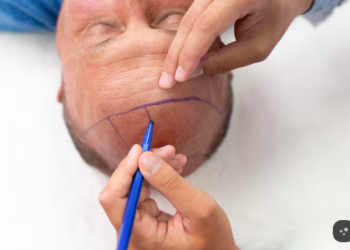
Open any hair transplant clinic’s website and you are likely to find the word “sapphire”. Sapphire blades are marketed as...

Personal growth is often presented as an endless process of self-improvement. People are encouraged to develop better habits, set more...

Welcome to https://uk49-results.co.za/, your ultimate destination for the very latest UK49 Lunchtime Results and UK49 Teatime Results. Whether you’re in...

When a documentary revisits a controversial military operation, viewers deserve an honest examination of the evidence. With Ground Truth, the...

Lamar Blackwell became a Chief Executive Officer at 25. It is the kind of line that tends to impress and,...

When a loved one is detained by immigration authorities, families often face uncertainty, stress, and urgent questions about what happens...


