
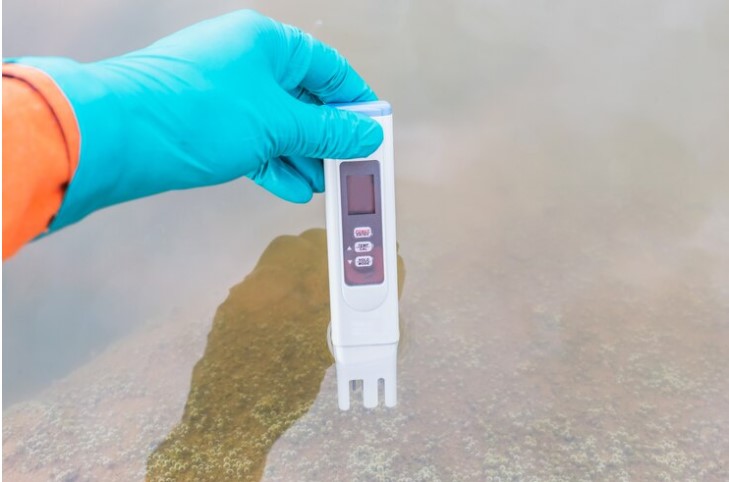
Temperature, the measure of the degree of hotness or coldness of an object, is a fundamental physical parameter with far-reaching applications. From our everyday lives to the most extreme environments on Earth and beyond, temperature measurement plays a crucial role in science, technology, and exploration. In this blog post, we’ll embark on a journey into the world of temperature measurement in extreme environments, from the frigid reaches of outer space to the crushing depths of the ocean’s abyss. Along the way, we’ll also explore the fascinating topic of converting between units of temperature measurement.
The Importance of Temperature Measurement
Before we delve into the extremes, let’s take a moment to appreciate the significance of temperature measurement in our daily lives and in scientific research. Temperature affects almost every aspect of our existence, from the weather to our comfort indoors. It influences chemical reactions, biological processes, and the behavior of matter. Accurate temperature measurement is essential in various fields, including meteorology, healthcare, industrial processes, and even cooking.
In scientific research, temperature measurement is a cornerstone of many experiments and observations. Precise control and measurement of temperature are vital for understanding the properties of materials, investigating chemical reactions, and exploring the behavior of matter under extreme conditions.
The Basics of Temperature Measurement
Before we explore extreme environments, it’s important to understand the basics of temperature measurement and the various units used. The four most commonly used temperature scales are Celsius, Fahrenheit, Kelvin, and Rankine. Converting between these units is often necessary when working with data from different sources or when conducting scientific research.
Celsius (°C)
Celsius, also known as the centigrade scale, is the most widely used temperature scale in the world. It is based on the freezing point of water at 0°C and the boiling point of water at 100°C (under standard atmospheric conditions). To convert temperatures from Fahrenheit to Celsius, you can use the formula:
°C=(°F−32) × 9/5
To convert temperatures from Kelvin to Celsius, simply subtract 273.15:
°C=K−273.15
Fahrenheit (°F)
The Fahrenheit scale is commonly used in the United States and some other countries. It is based on the freezing point of a mixture of salt and water at 0°F and the average human body temperature at 98.6°F. To convert temperatures from Celsius to Fahrenheit, you can use the formula:
°F=(°C×5/9)+32
Kelvin (K)
The Kelvin scale is the standard unit of temperature in scientific research. It is based on absolute zero, the lowest possible temperature at which molecular motion ceases. Absolute zero is defined as 0 Kelvin (0 K), which is equivalent to -273.15°C. To convert temperatures from Celsius to Kelvin, simply add 273.15:
K=°C+273.15
Rankine (°R)
The Rankine scale is less commonly used but is sometimes employed in engineering applications, especially in the United States. It is similar to the Kelvin scale but uses Fahrenheit degrees. To convert temperatures from Fahrenheit to Rankine, use the formula:
°R=°F+459.67
Now that we have a solid understanding of temperature measurement and unit conversion, let’s embark on our journey into extreme environments.
Temperature in Outer Space
Outer space is one of the most extreme environments imaginable. It is a vacuum, devoid of matter and air, with temperatures that vary dramatically depending on proximity to celestial bodies and exposure to sunlight.
Measuring Temperature in Space
In space exploration, accurate temperature measurement is crucial for the operation of spacecraft and instruments. Traditional thermometers are not suitable for space because they rely on the transfer of heat through a medium like air or liquid, which doesn’t exist in the vacuum of space. Instead, spacecraft use sophisticated thermal sensors and radiometers.
Thermal Sensors: These sensors use the principle that all objects emit thermal radiation based on their temperature. By measuring this emitted radiation, thermal sensors can determine the temperature of an object in space. This method is non-contact and works well in a vacuum.
Radiometers: Radiometers are instruments designed to measure the intensity of electromagnetic radiation. They are commonly used to study the temperatures of celestial bodies, such as planets and stars. By analyzing the spectrum of radiation emitted by these objects, scientists can infer their temperatures.
Extreme Temperatures in Space
Space can be a study in extremes. In direct sunlight, temperatures can soar to hundreds of degrees Celsius, while in the shadow of a celestial body, temperatures can plummet to hundreds of degrees below freezing. To deal with these extreme variations, spacecraft are equipped with advanced thermal control systems.
One example of extreme temperature management is the use of multi-layer insulation (MLI). MLI consists of multiple layers of reflective material separated by low-conductance spacers. This insulation reflects thermal radiation and minimizes heat transfer, allowing spacecraft to maintain a stable temperature.
Temperature in the Deep Ocean
From the vast expanse of outer space, let’s plunge into the depths of the ocean, where a completely different set of temperature challenges await.
Measuring Temperature in the Ocean’s Abyss
Temperature measurement in the deep ocean presents unique challenges. Traditional mercury thermometers are impractical due to the extreme pressure and the need to withstand corrosive saltwater. Instead, specialized instruments called CTD probes (Conductivity, Temperature, Depth probes) are used for oceanographic research.
CTD Probes: CTD probes are equipped with temperature sensors that can withstand the high pressures of the deep ocean. These probes are part of an instrument package that also measures the conductivity and depth of the water. By combining these measurements, scientists can gain insights into the ocean’s physical properties.
Extreme Temperatures in the Deep Ocean
As you descend into the ocean’s abyss, temperatures drop dramatically. The ocean is stratified into different layers based on temperature, with the warmest water typically near the surface. In the deep ocean, temperatures can approach freezing, especially in regions near the poles.
Extreme temperature gradients in the ocean have profound effects on marine life and ocean circulation. Understanding these variations is critical for climate research and predicting the impacts of global warming on ocean ecosystems.
Converting Between Temperature Units
Now that we’ve explored the extreme environments of space and the deep ocean, let’s take a moment to discuss the practical aspect of converting between temperature units.
Practical Unit Conversion
Converting between temperature units is a straightforward process once you understand the basic formulas mentioned earlier. However, for convenience, here are a few conversion examples:
Celsius to Fahrenheit: To convert from Celsius (°C) to Fahrenheit (°F), use the formula: °F = (°C × 9/5) + 32.
For example, if you have a temperature of 25°C and want to convert it to Fahrenheit:
°F = (25 × 9/5) + 32 = 77°F.
Kelvin to Celsius: To convert from Kelvin (K) to Celsius (°C), subtract 273.15 from the Kelvin temperature.
For example, if you have a temperature of 300 K and want to convert it to Celsius:
°C = 300 K – 273.15 = 26.85°C.
Fahrenheit to Rankine: To convert from Fahrenheit (°F) to Rankine (°R), add 459.67 to the Fahrenheit temperature.
For example, if you have a temperature of 100°F and want to convert it to Rankine:
°R = 100°F + 459.67 = 559.67°R.
These conversions are essential when working with data from different sources or when conducting international scientific research where different units are used.
Temperature: Integral to Science
Temperature measurement is a fundamental aspect of our lives and scientific endeavors, and it takes on new dimensions when applied in extreme environments. From the scorching heat of space to the icy depths of the ocean, precise temperature measurement is vital for scientific discovery, exploration, and practical applications.
Understanding the basics of temperature scales and unit conversion is essential for scientists, engineers, and anyone working with temperature data. It enables us to bridge the gap between different measurement systems and facilitates collaboration on a global scale.
So the next time you’re sipping a hot cup of coffee, marveling at the stars in the night sky, or exploring the mysteries of the deep sea, remember that temperature measurement is an integral part of these experiences, connecting us to the farthest reaches of our universe and the deepest corners of our planet.